Table of Contents
Introduction
World war 2 was a logistical and resource-based war at its heart, this motivation dictated many of the key decisions made and the battles participated in. The Atlantic Ocean was the key logistical obstacle between the allies and was crucial to control for economic and diplomatic links to be kept strong. This essay will focus on how securing the Atlantic allowed the necessary logistical advantages to save Britain from capitulation in its air war and eventually drag Germany into a long-term conflict they could not win
.Context:
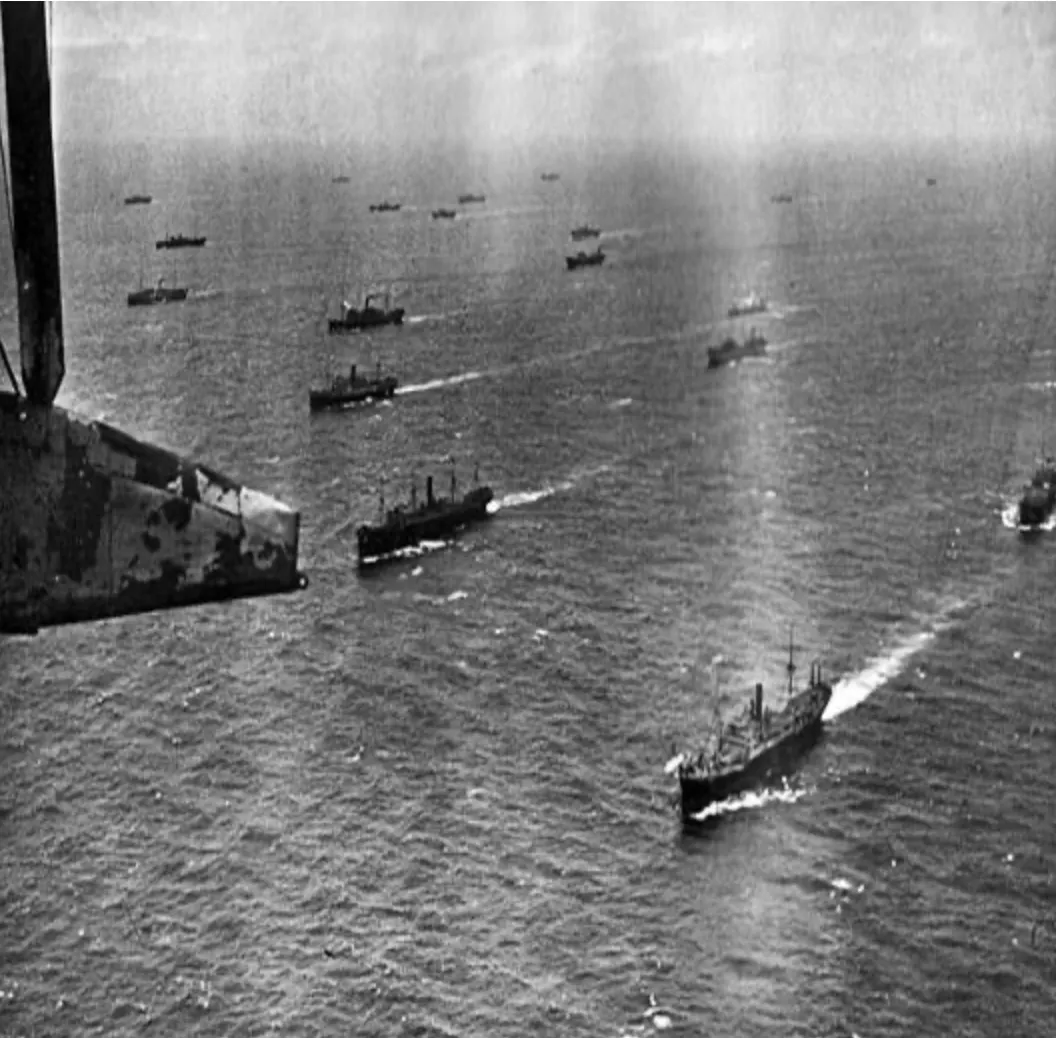
The Battle of the Atlantic waged from September 3rd, 1939, to early 1945, it is considered the most prolonged and intense naval engagement of its kind. Nazi Germany attempted to cut the logistical links between allied powers flowing through the Atlantic, which underlined their power basis through unrestricted and unrelenting submarine warfare. Using Just initially 58 submarines and its large air force Germany attempted to isolate Island Britain from its resource base in allied countries and colonial holdings knowing its dependence on imports.
U-boats attacked shipments from the North most point of Europe to the coast of Africa sinking over 3500 merchant and 175 warships over the course of the war. This campaign initially saw great success for the Germans, they were able to put significant strain on Britain’s food security, and sunk 1660 ships and 41 warships between 1939 and 41. However the Allies quickly wised up, using their superior technological and tactical innovations such as convoy strategy and adaptive anti-submarine radar equipped ships to start turning the tide of the battle. Amongst Cracking the German ship communication Enigma code and bridging the “air gap” spot in the middle of the Atlantic with longer distance aircraft, stopping German wolf pack tactics. This combination of advantages leads to German U-boats being sunk in large numbers, 783 over the war compared to 175 allied ships. Eventually when the Allies invaded the German western flank key boat bases in Norway and France fell and the Battle ended in 1945. The relevance of the Atlantic to Britain’s sovereignty should not be underestimated, Britain imported 60[1] percent of all its food and most of its resources without these it would have capitulated.
Resources:
Britain was extremely wealthy in resources from its empire and dominium’s, especially in Aluminium through Canada and Rubber from its southeast Asian colonies in specifically Malaya, moreover large oil imports from America at the time producing 60 percent of the world’s oil. Without access to these resources domestically Oil, aluminium and rubber were non-existent the only significant resources being coal. Hence it was extremely reliant on sea-based imports for its survival domestically and internationally
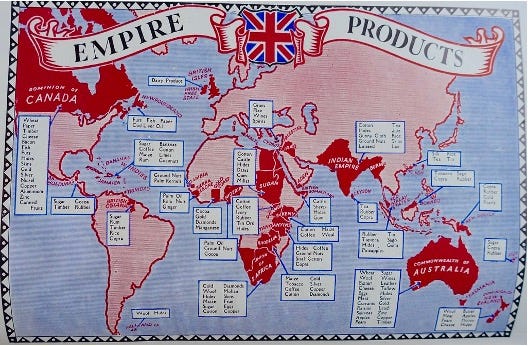
.Winning in the Atlantic allowed Britain to access its resources from its empire and the vast industrial capacity of the US, enabling it to produce enough aircraft to win the Battle of Britain and avoid initial capitulation, whilst dragging Germany into a war of attrition it could not win.
The Battle of Britain:
Britain would have lost the attrition-based Battle of Britain, as it would have had to few airframes without the resources from Atlantic convoys.This idea is supported by the Writer Richard Overy in his book the battle of Britain (2000), he explicitly states “The Atlantic lifeline kept Britain’s Factories fed[2]”. If Britain had lost aerial supremacy in the BoB, it would have incentivised an Axis amphibious invasion, knocking Britain out of the war, which at the time was extremely vulnerable after losing most of its armies combat capacity and equipment at Dunkirk. Protecting logistics in the Atlantic became crucial to Britain’s survival, a sentiment heavily shared by Sir Weston Churchill, who claimed the Atlantic worried him most for this reason. The Germans were conducting a textbook Mahan strategy, the one who can use his navy to cut the others access to resources like food and fuel is able to force the nation into capitulation and significantly weaken it[3]
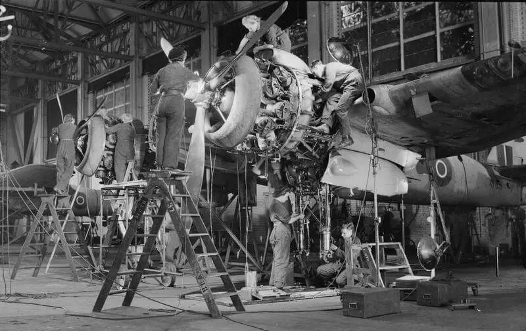
Britain was crucial to the Allied Long-Term Strategy, its existence spread and depleted Axis resources and was geographically significant.
WW2 was a war of logistics and economic prowess. Key commanders like George C marshal US army chief of staff understood that if the allies could keep in the race long enough the resource and production disparity would of lead to a slow and decisive victory, due to Germanies chronic lack of resources[4].Crucially this strategy involved absorbing the initial axis momentum, due to the early Axis militarism[5] which the allies had to catch up to, i.e. what was facing Britain. Then an allied counterattack could prevail, Geographically Britain being the only viable place to launch this from, this idea is talked about Extensively by Kennedy Paul, where he rightly states “Britain’s geographical location…allowed it to serve as an unsinkable base for the projection of allied power against Germany” [6].
Evidence to support the capitulation of Britain was avoided due to crucial resources reaching production facilities from the Atlantic in time to win the battle of Britain:
Britain produced over 1400 aircraft between the months of July and September 1940[7] these aircraft were heavily reliant on Aluminium, Rubber and Oil imported from the empire and America. These aircraft were considered crucial in winning the battle, Richard Overy reiterated this point in his book, claiming in the same time Germany produced only 775. These aircraft mainly relied on Aluminium from North America, Lord Beaverbrook the man in charge of Britain’s air force production said in a speech regarding aluminium shortages in 1940 “We owe a great debt to the dominions especially Canada, for raw materials keeping out factories alive and keeping out spitfires in the air”[8] proving Britain’s reliance on imported resources. Churchill also made this assertion of thanks to the Canadians stating in their parliament in 1941 “Your contribution in men and materials has been invaluable”[9
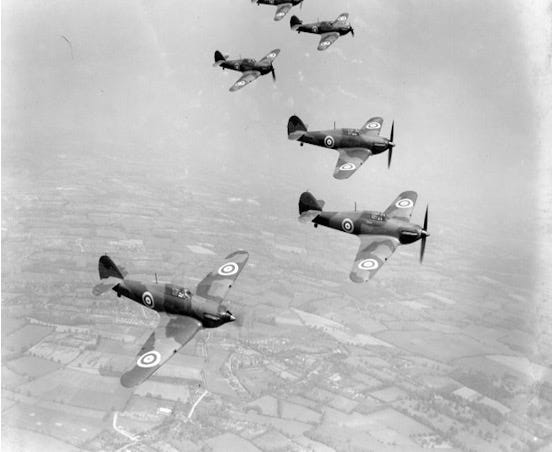
By 1940s Britain domestic mining of Aluminium fell to an all-time low, this shortage was made worse by the fall of aluminium rich France. Britain is estimated to have imported 70 percent of its aluminium from North America, with records stating North America exported 80,000 tonnes in a year whilst the domestic industry produced 20,000[10] . Most of this Aluminium was directed toward the aircraft programme, “The output of factories…depended heavily on the supply of aluminium which by the late 1940s were increasingly sourced from Canada”, supported by Historian Michael Postan[11]. Moreover, other key resources like rubber in the early 1940s, 60 percent of Britain’s rubber came from Colonial Malaya[12], showing Britain’s reliance on imports and hence the importance of the Atlantic where they resources were funnelled through.
Battle Of Britain: Attrition
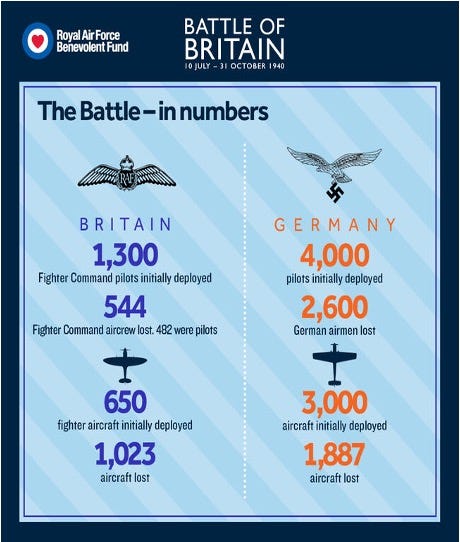
To many theorists such as Alfred Price the Battle of Britain was an attrition battle and an attempt to drain Britain of its aerial capacities to defend against invasion. Indeed, this hypothesis coincides with the fact Britain lost 1023 aircraft over the battle due to German tactics. German Commanders like Goring[13] deliberately sought to draw RAF fighters into combat over the Atlantic either through baiting tactics “Kanal Kampf” or the bombing of airfields to draw all available fighters into defensive battles. All to drain Britain of its airplane stocks whilst attempting to cut their resource supply line in the Atlantic. This created a dilemma for low resource wealth Island Britain completely reliant on imported resource for its aircraft production. The demand for these resources increased dramatically as production and battlefield losses increased, meaning royal navy convoys fending of U-boat attacks in the Atlantic became essential.
How the Atlantic contributed to winning the Battel of Britain:
The Royal navy managed to protect 85 percent of all convoys in 1940 out of 2500 ships from Canada and Halifax America carrying aluminium to Britain[14]. There is significant evidence showing that most of these resources such as aluminium and rubber were going toward plane production which in turn provides strong evidence to suggest the Atlantic had a large impact on the air-war. Government records at the time predict 60 percent of all aluminium went toward the air force. This large commitment was backed up by Churchill himself who in May 1940 urged Beaverbrook shortly after his appointment to find as much aluminium as he could for aircraft production and make it a priority[15]. The prioritisation of resources from the Atlantic convoys allowed Britain to ramp up fighter production, producing 500 a month at a peak.
Britain began to gain the upper hand in the battle, having full access to its Atlantic resources it outproduced and out repaired the German war machine, creating 1500 new aircraft and repairing 700 over the course of the battle. The RAF inflicted larger aerial losses on the Luftwaffe on top of this, 1800 German planes to 1000 British[16]. This eventually caused the Germans to abandon their invasion plans, as they realised the RAF was only getting stronger and their losses were becoming intolerable. Their operation sea lion, of course being based on Aerial supremacy to remove the threat of the British navy attacking their slow repurposed landing craft. It was clear that Britain avoided capitulation, thanks to superior logistics from the Atlantic
The significance of a Belligerent and Sovereign Britain:
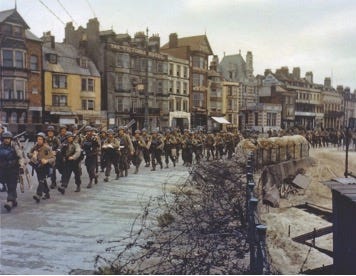
The presence of an ever increasingly rearmed and belligerent Britain, put a thorn in the side of the Axis they could not remove. The victory in the Battle of the Atlantic allowed Britain to stay in the metaphorical race, it would soon be used as a staging area for future offensive operations into the Axis flank. The presence of a remilitarising Britain also creating severe resource and strategic implications for the Axis powers. The most obvious having to deploy 1 million troops from their strategic reserve to France and build fortifications, with resources it could not spare
:
Britain after ensuring its independence was able to further stretch Axis resources and manpower in an unsustainable way, via opening frontlines in North Africa. Using the Atlantic to increasingly reinforce its 30,000 strong battalion in Egypt soon after the Battle of Britain with 50,000 soldiers in 1941. Which should be understood under the context of slowly draining Axis limited resources.
A sovereign Britain geographically was Crucial for Soviet-American relations, as it was the route all the Artic lend lease convoys travelled through, the quickest route to supplying the Soviets. These convoys although only representing 6 percent of all Lend Lease, was crucial diplomatically for the allies as although the route was extremely dangerous and relatively insignificant It showed the diplomatic commitment of America and Britain to the Soviets. This became very important in keeping the Soviets on side in 1942, when there was signicant discontent over the disproportionate losses due to the western frontline opening be delayed, and a Nazi peace deal on the table. Stalin was seen to mention artic convoys as important to calming his insecurities about the alliance several times in telegrams to Churchill and Roosevelt[17].
Most importantly It should be emphasised that keeping Britain in the war allowed for the long-term plan of draining axis momentum and resources which won the allies the war to be carried out. The allies seeked to slowly outproduce and overwhelm the Axis, absorbing their initial momentum, a Sentiment shared by top allied commanders like Field Marshal Alan Brooke in his own memoirs[18]. The victory in the Atlantic allowed allied logistical advantages to prevail and this plan to come to foliation.
To conclude, clearly the allied Victories in the Battle of the Atlantic was an essential precondition of a Sovereign and belligerent Britain in WW2. Without strong logistical support Britain would have capitulated to Nazi Germany, via losing aerial supremacy. Keeping Britain in the war, the allies enabled themselves to carry out their long-term attrition strategy, slowly depleting the Axis of resource and momentum. It is clear to me that the Battle of the Atlantic victory was crucial for allied victory in WW2, I cannot see the Axis powers being stropped without the presence of Britain and its empire, this war was clearly won on logistics rather then insane tactical genius.