Table of Contents
The first and most important battle of the war in Ukraine.
A tale of extreme heroism from Ukrainian forces and a cunning Russian air assault plan that nearly ended the war before it started.
(Look below for the timeline of events)
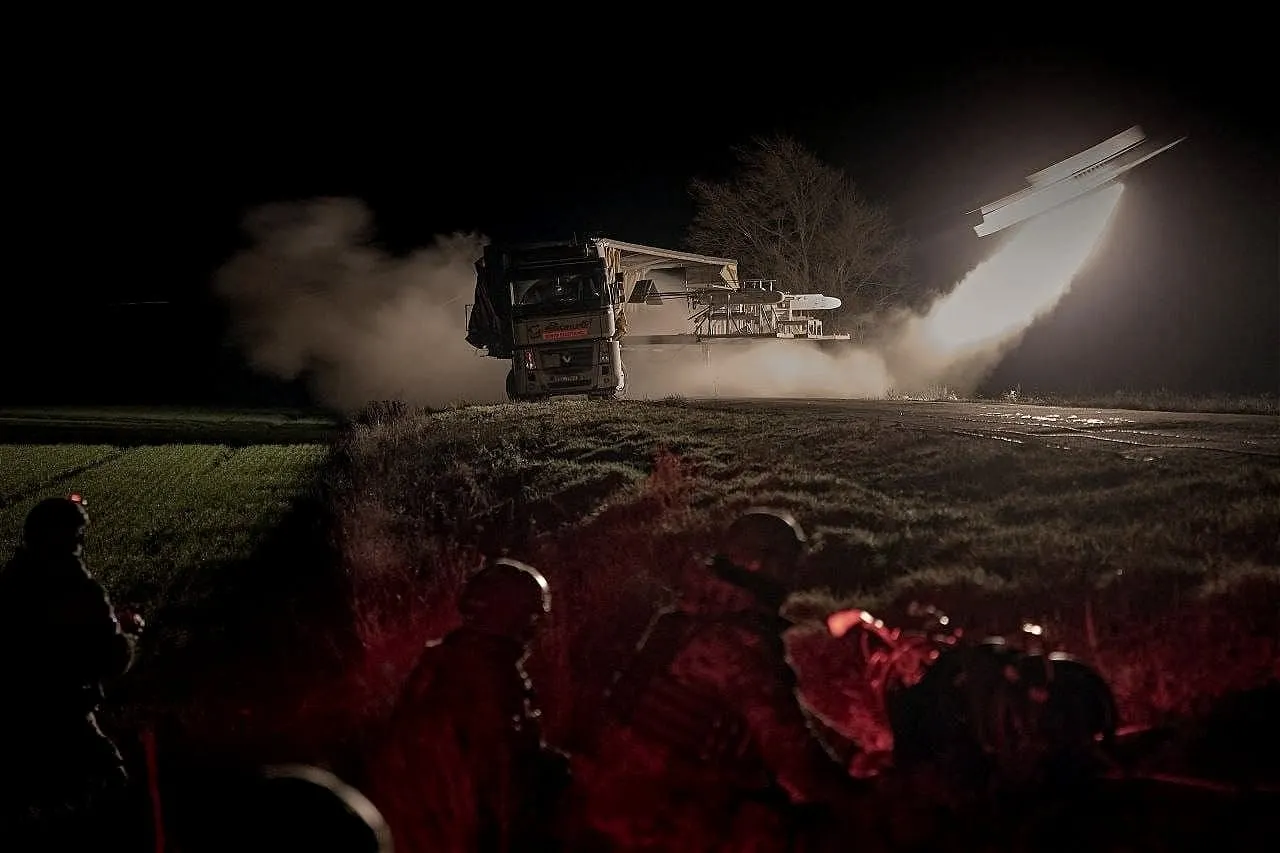
Just minutes after President Putin declared the start of his renewed invasion Russian forces sent 2 3M54 Calibre Cruise missiles to target the national guard 4th rapid reaction brigade military base right next to Hostomel airport both hitting the then empty parade square.
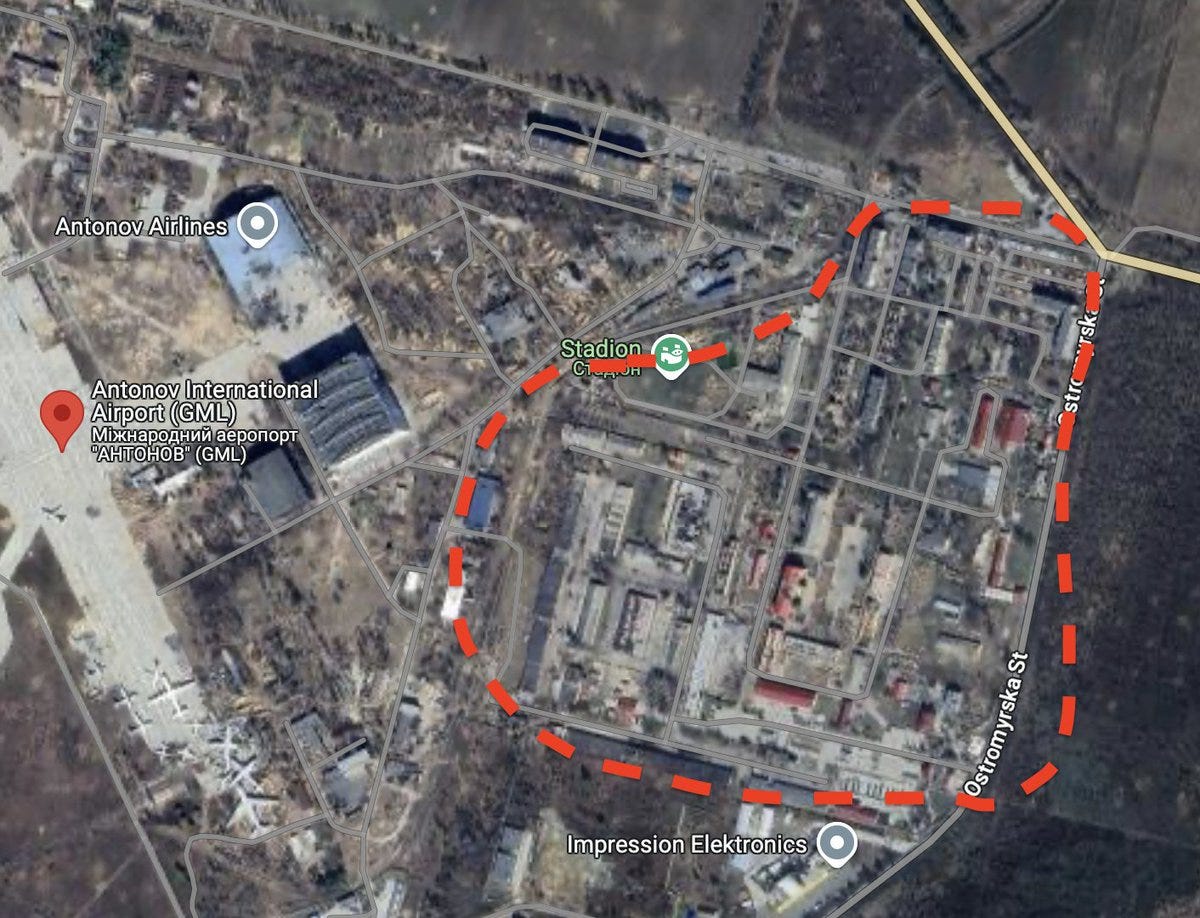
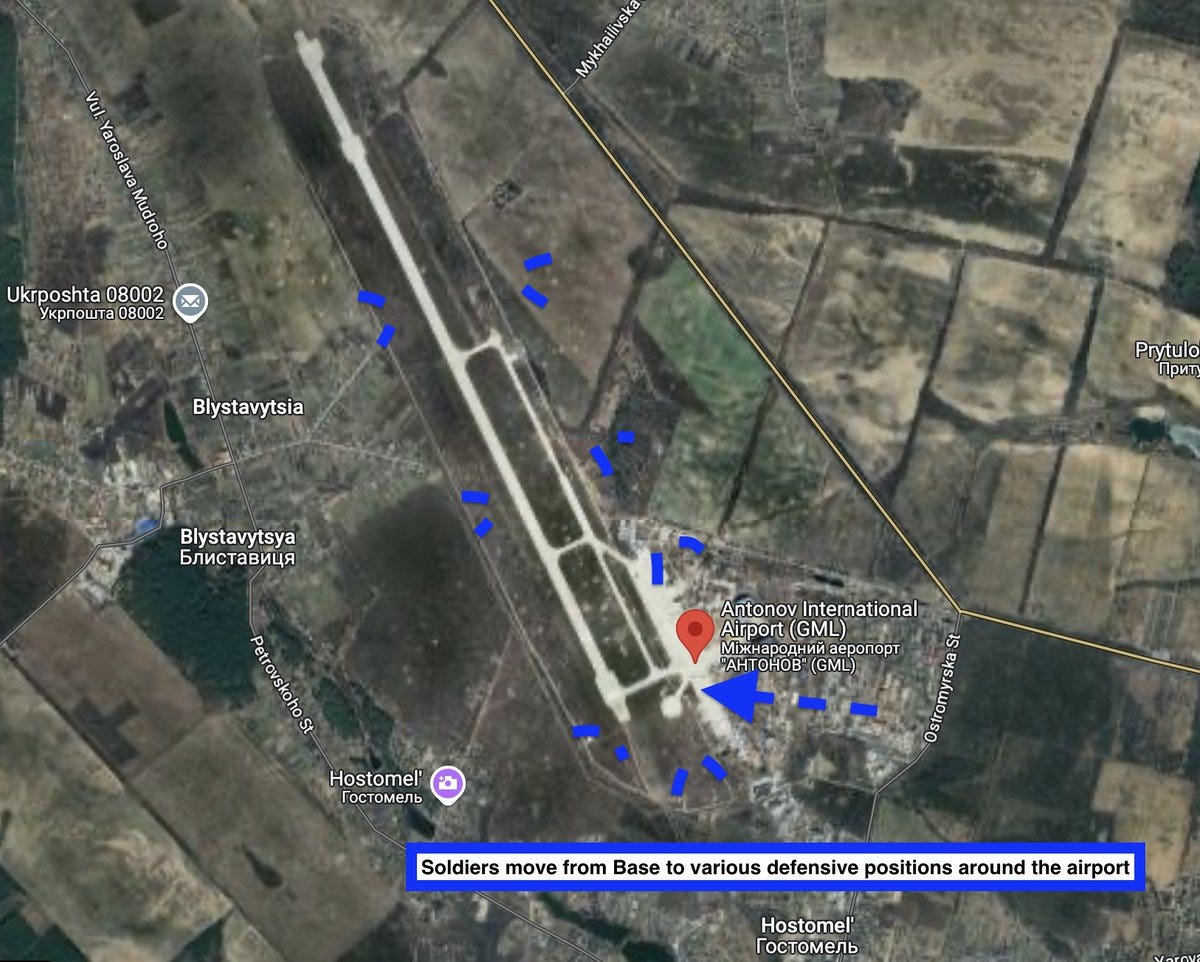
In reaction to the strike 200 Ukrainian conscripts from the 4th brigade moved out from the base and set up defensive positions in small groups around the airport only armed with small arms and soviet era anti air and tank missiles.
They are later reinforced by units from the 1st operational brigade and from the OMEGA anti terrorist units who are all similarly armed.
There was a huge shortage of men as many professional soldiers had been sent to other directions, so now the defence of this hugely strategic location was left to less then a brigade sized element who were not able to cover the whole perimeter so had to move in small groups and spread out.
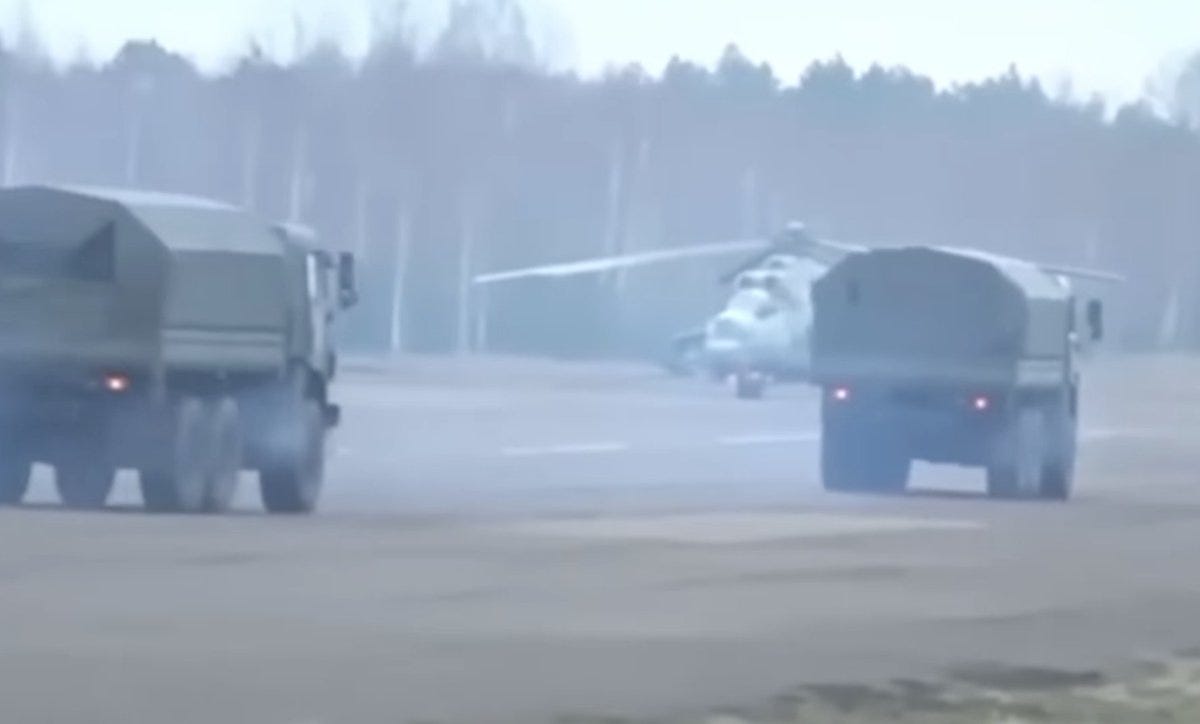
At the same time 170km from Hostomel airport a large Russian air assault grouping including 34 helicopters carrying elite Russian VDV special forces is waiting to take off from Bolshoy Bokov Airfield.
This grouping included majority MI-8 transport helicopters 10 KA-52 combat helicopters and several MI-24 and 28 assault helicopters.
Their target is Hostomel airport one that proved to be fatal.
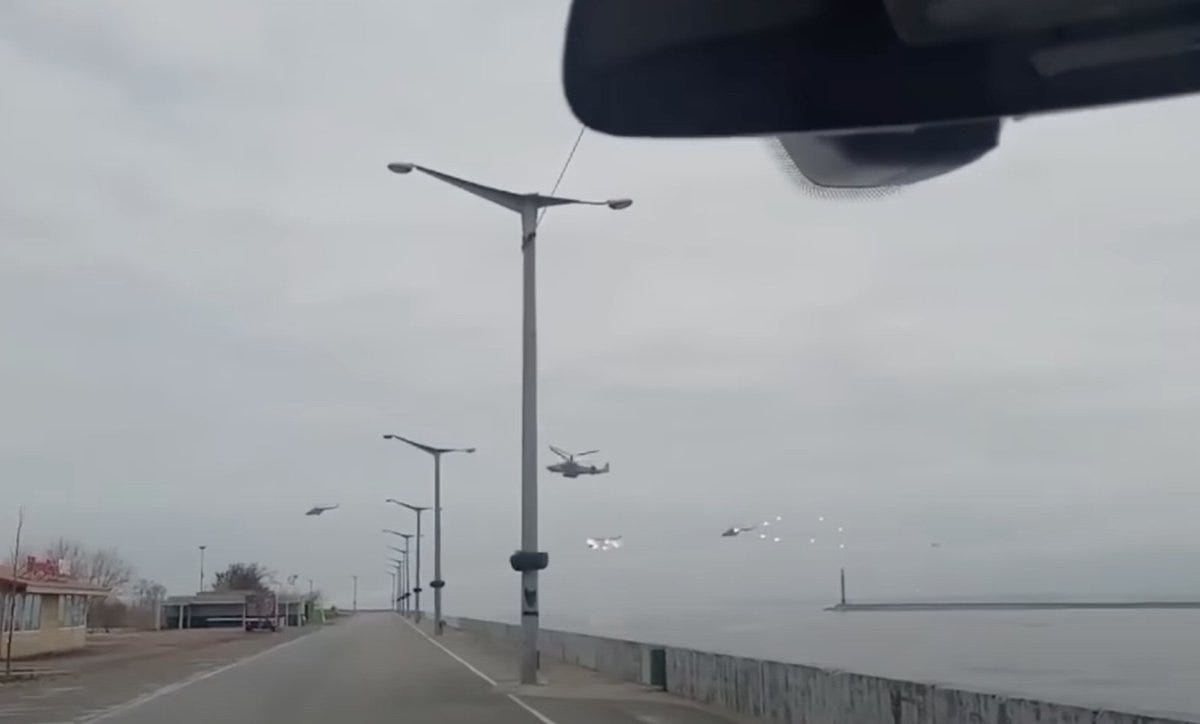
The First wave of Russian Helicopters takes off and heads south along the Dnipro river entering Ukrainian territory flying low towards the Kyiv Hydro electric power plant where they famously take a sharp turn to head toward Hostomel.
They are engaged by multiple Ukrainian anti air units along the Dnipro river as they attempt to turn with one Russian KA-52 and one MI-28 attack helicopters both being shot down in turn the rest of the helicopters deploying their flares accordingly.
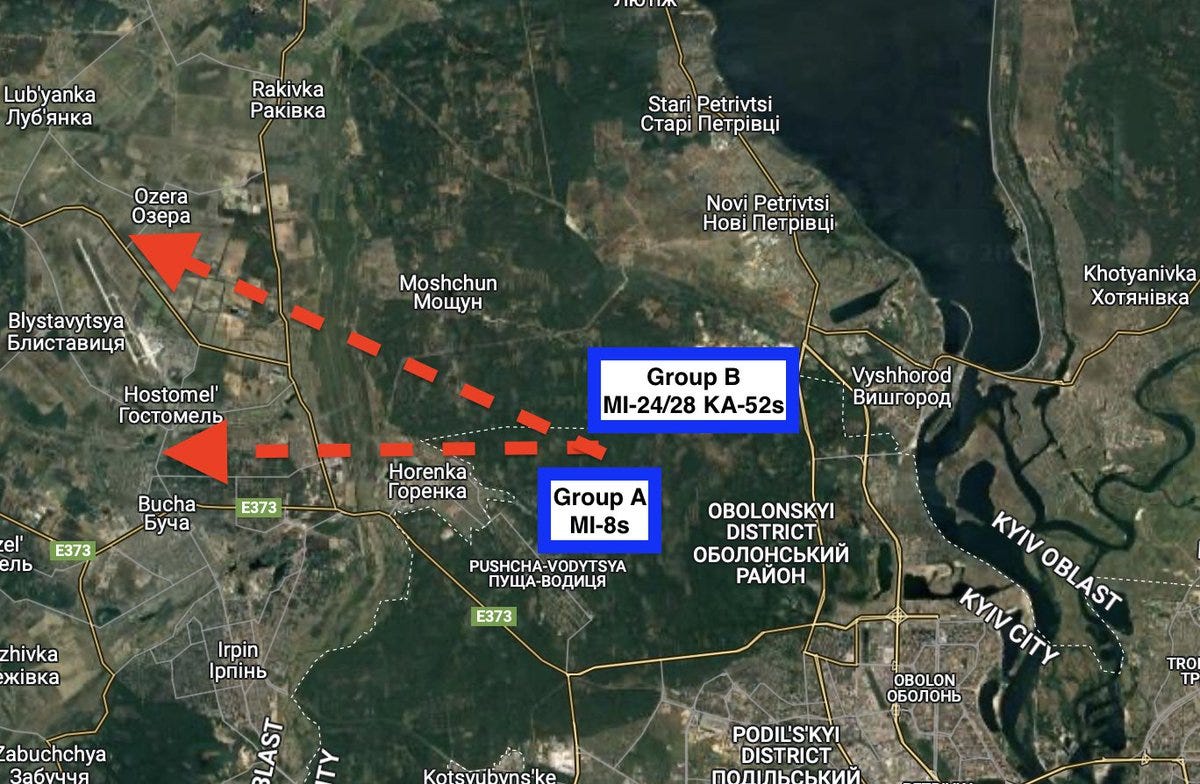
The Russians then split their air assault grouping into Group A and Group B as they are heading west towards Hostomel.
Group A mainly made up of attack helicopters heads north of the Airport to inspect and destroy any elements of Ukrainian forces blocking the runway.
Whilst Group B mainly made up of Mi-8 transport helicopters heads south of the airport to cut off the national guards base of operations.
Once the Attack helicopters reach the airport they start to pummel Ukrainian positions with missiles and large calibre weapons.
However instead of being met with unprepared resistance they are met with defenders who are well positioned who start to return fire with deadly effects.
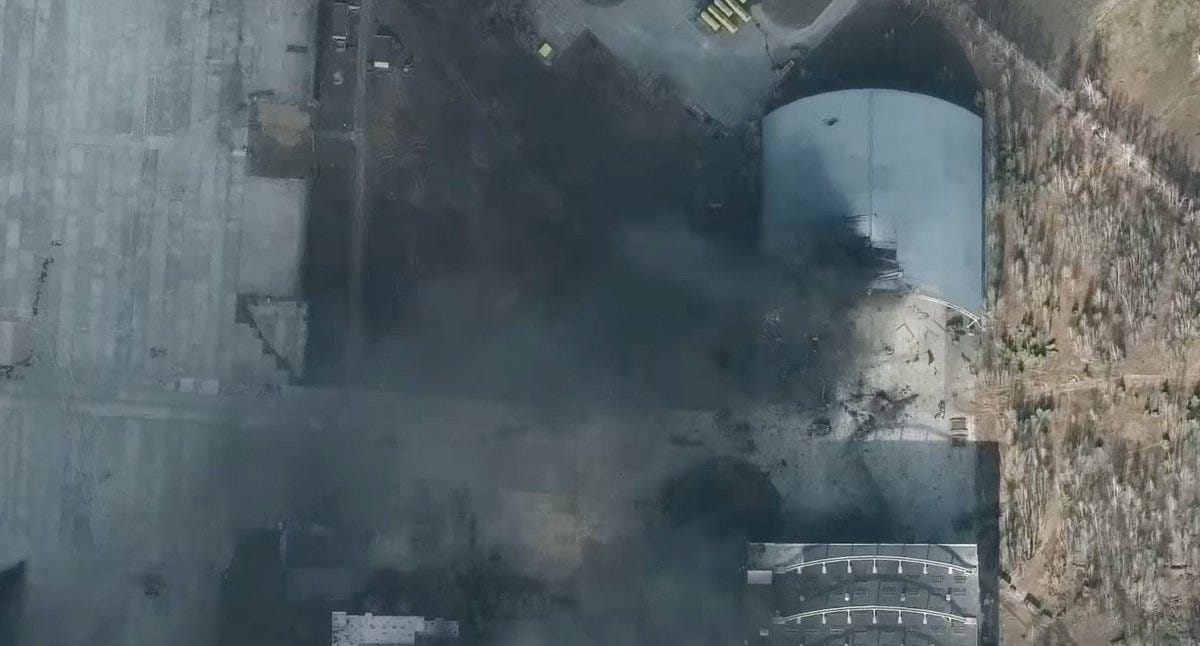
Ukrainian defenders armed with manpads as the assault intensifies manage to down 4 Russian KA-52 and 1 MI-28 attack helicopters who are performing strafing attack runs along the runway one of these aircraft lands directly in the middle of the runway.
In turn Russian MI-8 transport aircraft arrive but are unable to land due to taking heavy small arms fire from many directions so instead have to circle around surrounding villages which is where many videos were taken.
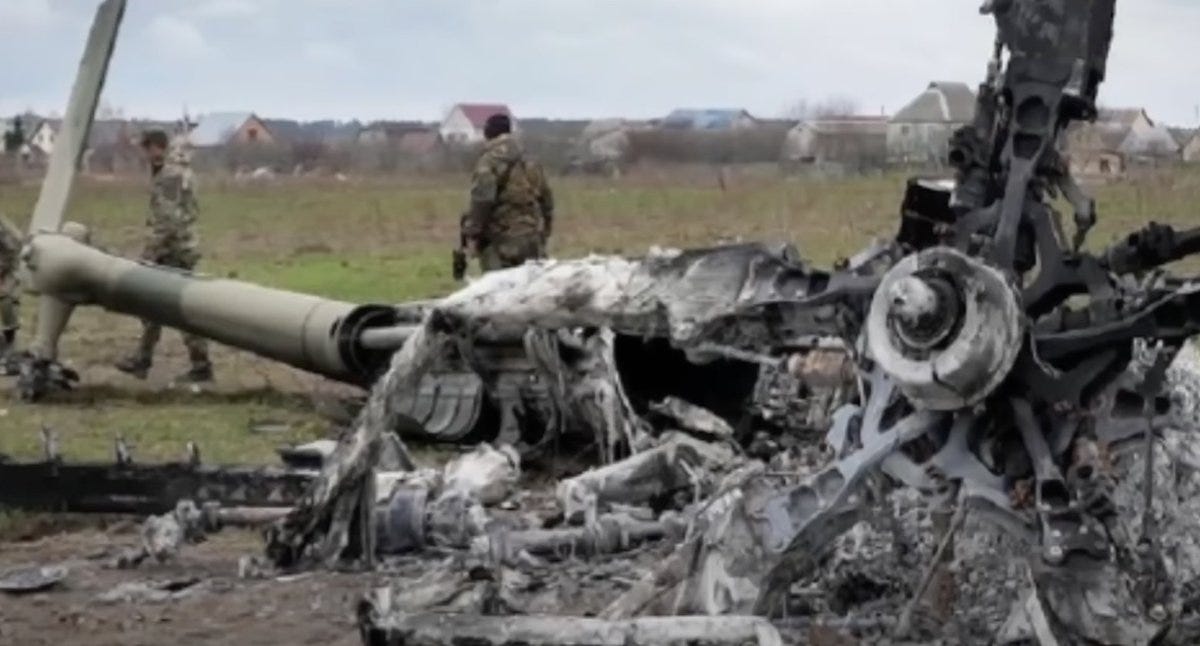
The fight continues for another hour with Russian MI-8s unable to land.
Ukrainian units then retreat back to the 4th rapid response base as they are running out of ammunition.
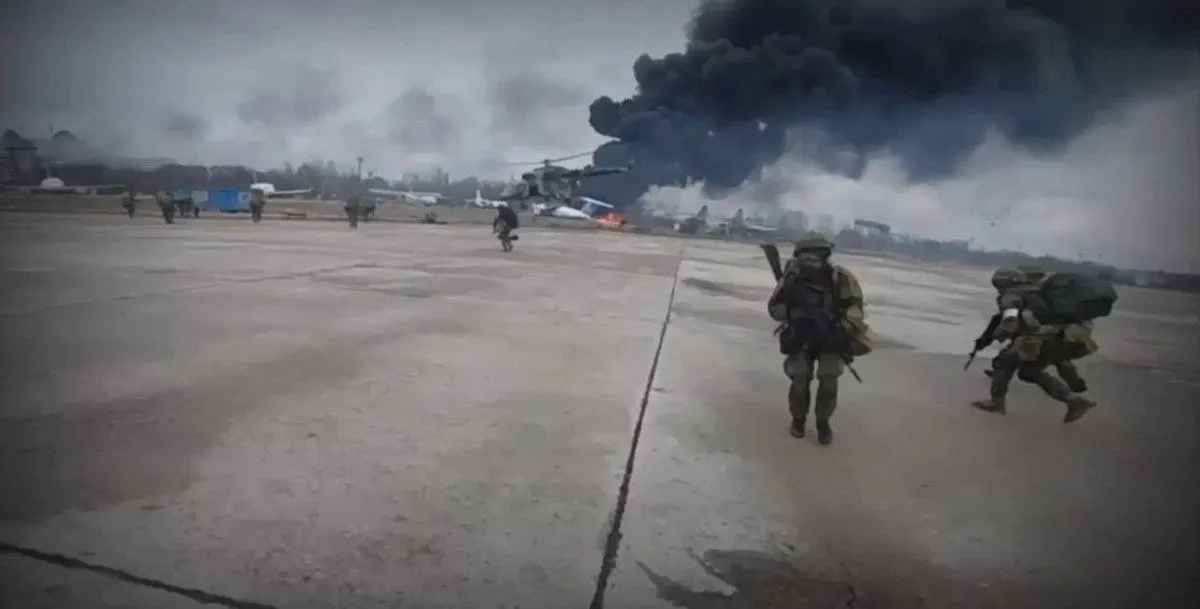
This then allows the Russian VDV troops in the MI-8 helicopters to land on the north western side of the airport where they deploy all of their paratroopers.
The Russians also land on the north west of the airport with another landing force in an effort to surround the base, the initial wave was around 100 soldiers from the 31st guards and 18th separate guards air assault brigades of the Russian army they were heavily armed with portable mortars and grenade launchers.
They manage to secure the main runway, along with several administrative buildings but they do not advance straight away as they are waiting for reinforcements.
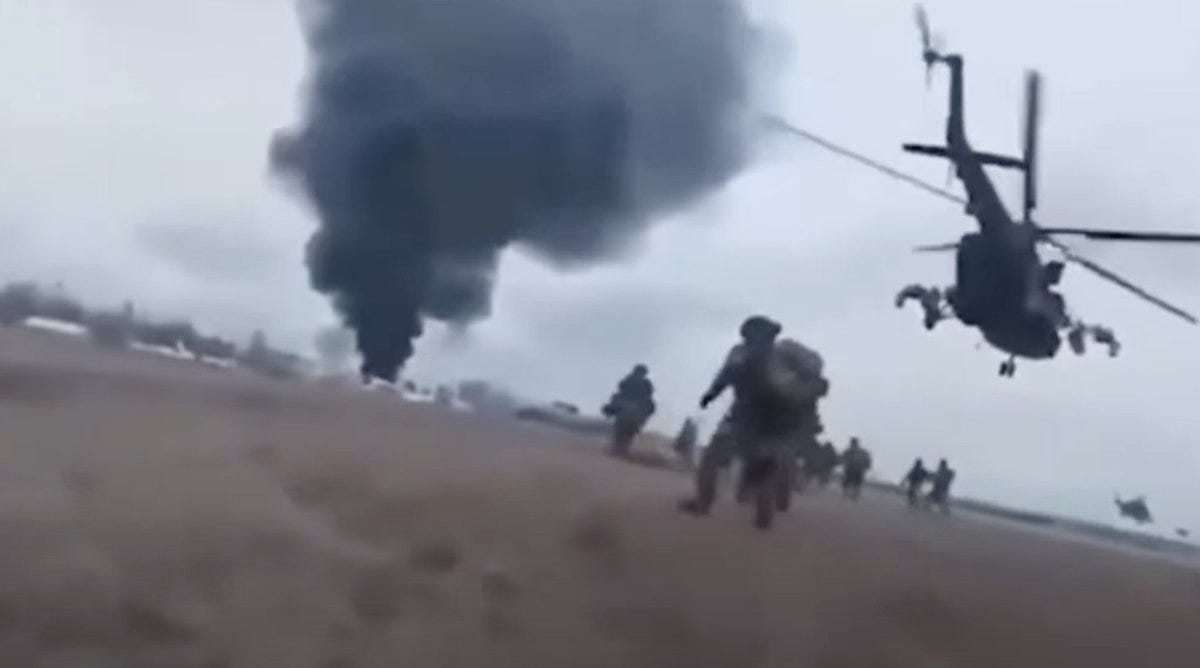
Russian air assault units pause for around an hour surrounding the Ukrainian base as more reinforcements arrive to Hostomel in the second wave of MI-8s who land an additional 200 paratroopers allowing them to continue their advance around the airport.
They move cautiously and clear the surrounding area the control tower and buildings around are captured quickly.
The first on the ground contact between Ukrainian and Russian forces happens along the cross roads between the airport and the base where a fierce battle rages for 2 hours.
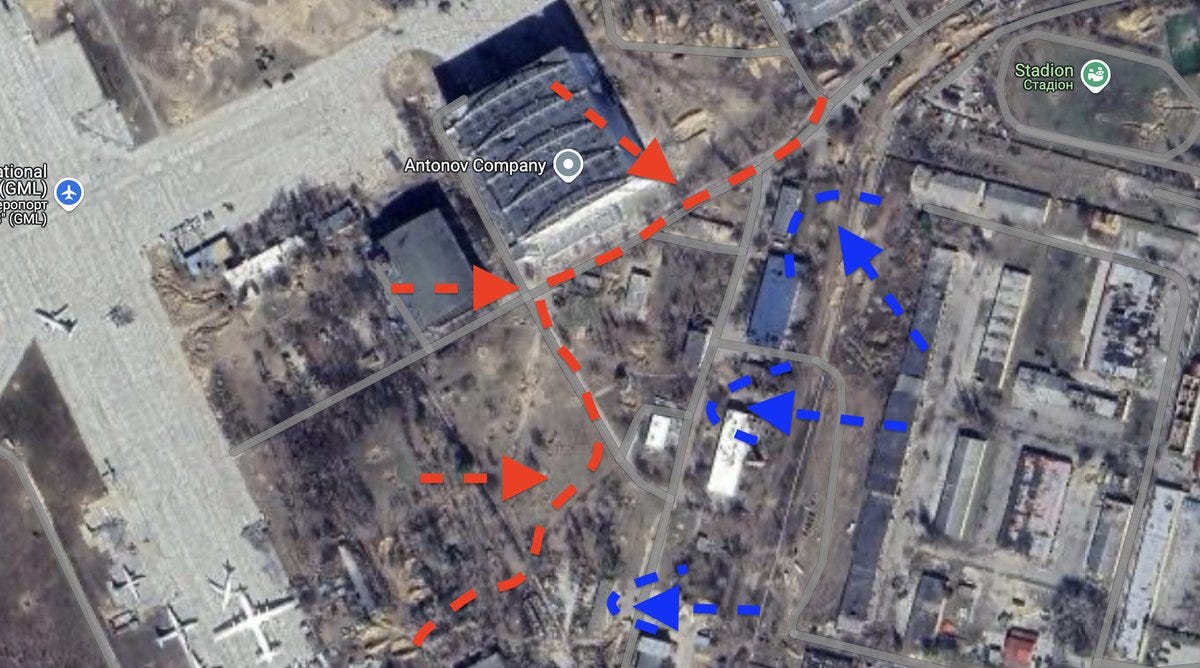
After a prolonged battle Ukrainian forces are forced to withdraw as they have ran out of ammunition they swiftly moved south east of the base and disappear into surrounding forest areas.
The Russians move in and capture the base meaning at this time the airport has fallen into their control.
They raise their flag above the airport and start setting up defensive positions to defend the runway.
This is because they are seeking to land an additional brigade sized element of Russian paratroopers and light armoured vehicles carried by 18 Ilyushin Il-76 large transport aircraft who take off from Russia almost immediately.
However little to they realise their assault has taken to long and reinforcing heavy Ukrainian units will soon arrive.
If the Russians had been able to land this force on the airbase it would have been catastrophic for the Ukrainian defence of Kyiv as such a large force would have been hard to stop.
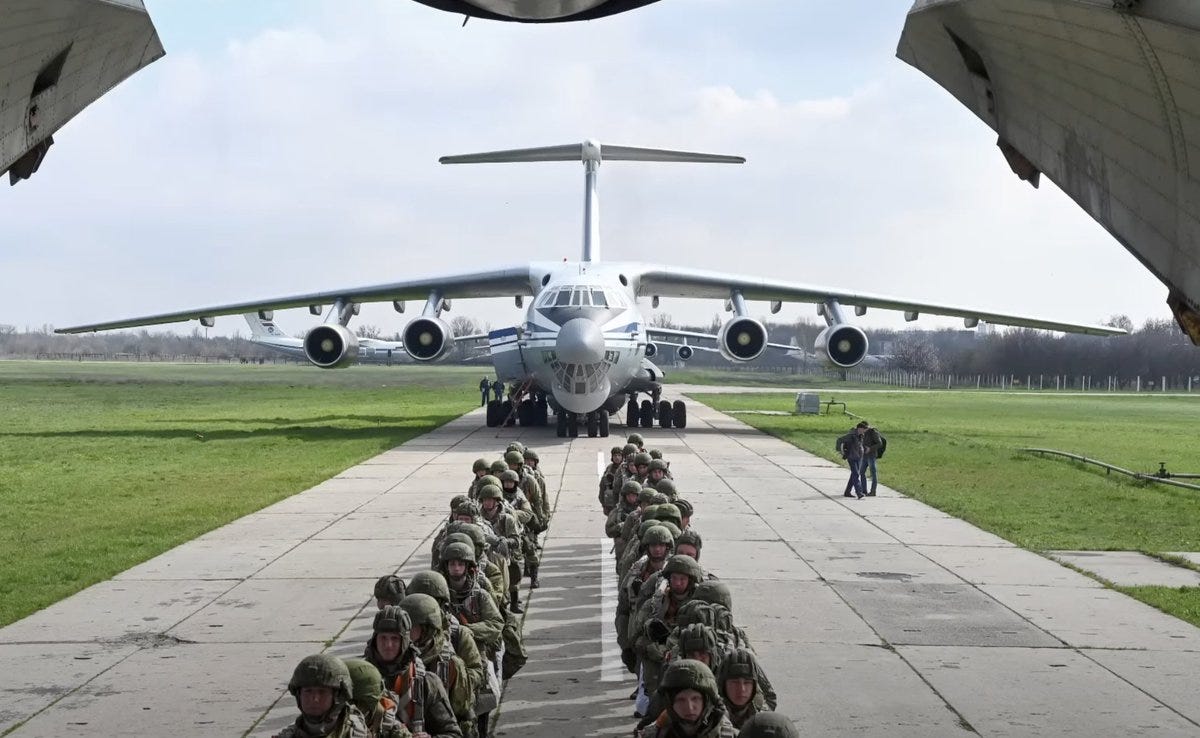
Whilst the Russian paratroopers try to chase away the 4th rapid reaction conscript groupings.
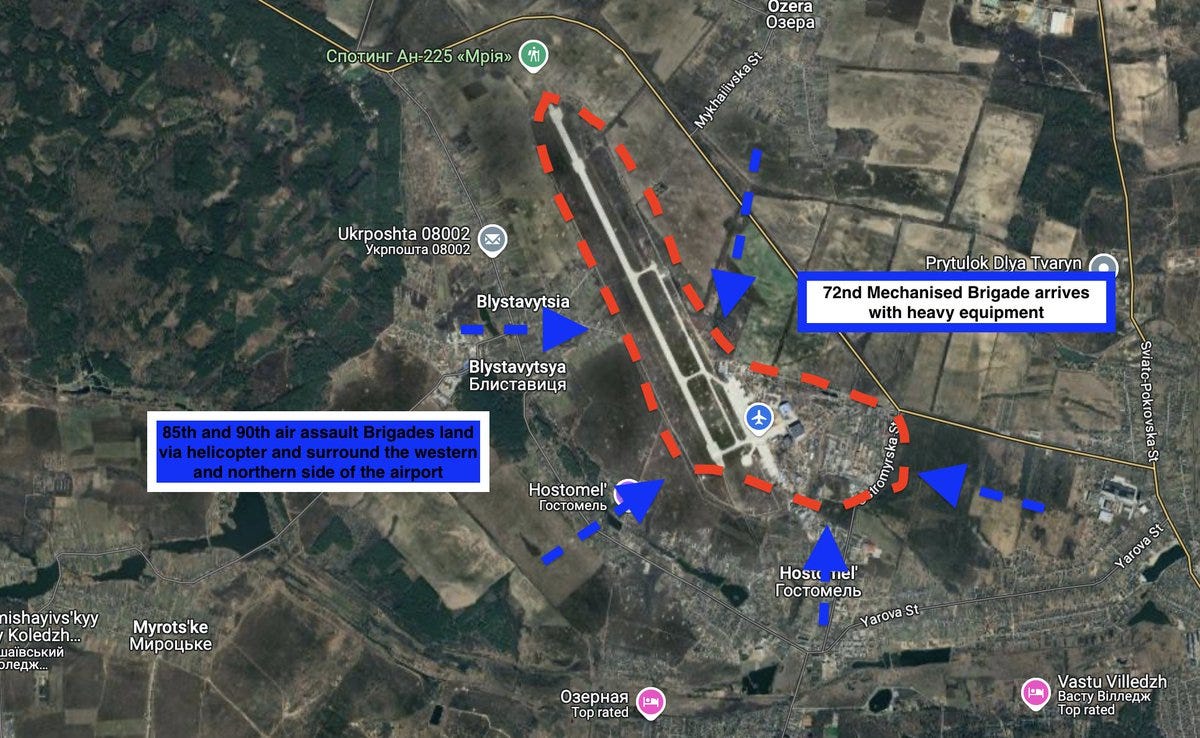
Heavy Ukrainian 72nd Mechanised Brigade arrives north east of the airport with tanks and heavy artillery after an hour Long drive from its base in Bila Teservka surrounding that side of the airport.
To the west of the airport the Ukrainian 80th and 95th air assault brigades also arrive on their own MI-8 transport aircraft effectively surrounding the Russians in the airport.
These Ukrainian reinforcements then begin to set up heavy artillery and mortar positions to pound Russian vdv in the area of the airport.
The fighting has a brief pause as Russian paratroopers under strict orders to not leave the airport in wait for their large reinforcements to arrive, this gives the Ukrainians enough time to plan and execute their own counterattack at 3:30 pm the airport is completely surrounded and the order is given to liberate it.
Ukrainian Counterattack:
Ukrainian heavy artillery starts along with SU-24 bombers from the airforce start to heavily hit the airport especially the runway rendering it useless, as Ukrainian command has intelligence of the large reinforcements landing which is to come.
Ukrainian land forces with support form armoured vehicles and close air support from Mi-28 gunships start to advance into the airport from several directions, heavy fighting ensues.
As the fighting intensifies Vdv units take heavy losses and are forced to desert their positions now themselves running into surrounding forest areas, building by building is cleared of Russian elite paratroopers.
By 9PM all resistance in the airport area has been removed, Russian large air transports heading towards the airport with a brigade of air assault troops are called off and are forced to land in Belarus.
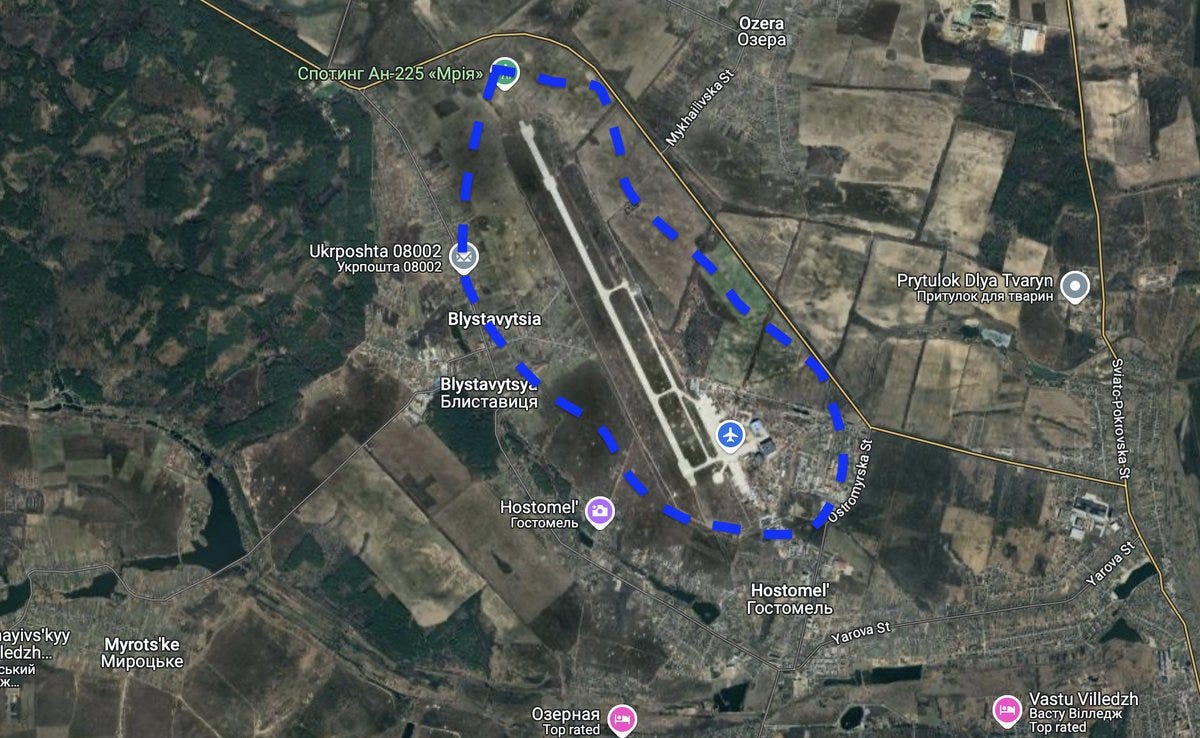
Despite the heroic counterattack made by Ukrainian forces, Russian reinforcements arrive to Hostomel surprisingly the next day this time from the north as several battalion tactical groups had advanced south from the Belarusian border through the Chernobyl exclusion zone.
On the 25th of February the fight for Hostomel town begins and by March 5th the whole town is under control of Russian forces.
As Ukrainian forces had to withdraw being severely outnumbered and outgunned by several battalion tactical groups.
After the Ukrainians retreat from the airport they begin another massive artillery bombardment of the runway rendering it completely useless for any air landing operations in the future, whilst also causing massive losses to Russian brigades who had set up base in the area.
Ukrainian forces continued to counterattack in the area in particular having success on march 16th, despite this Russians held the airport and the town until their full withdrawal from the north of Ukraine on April 1st.
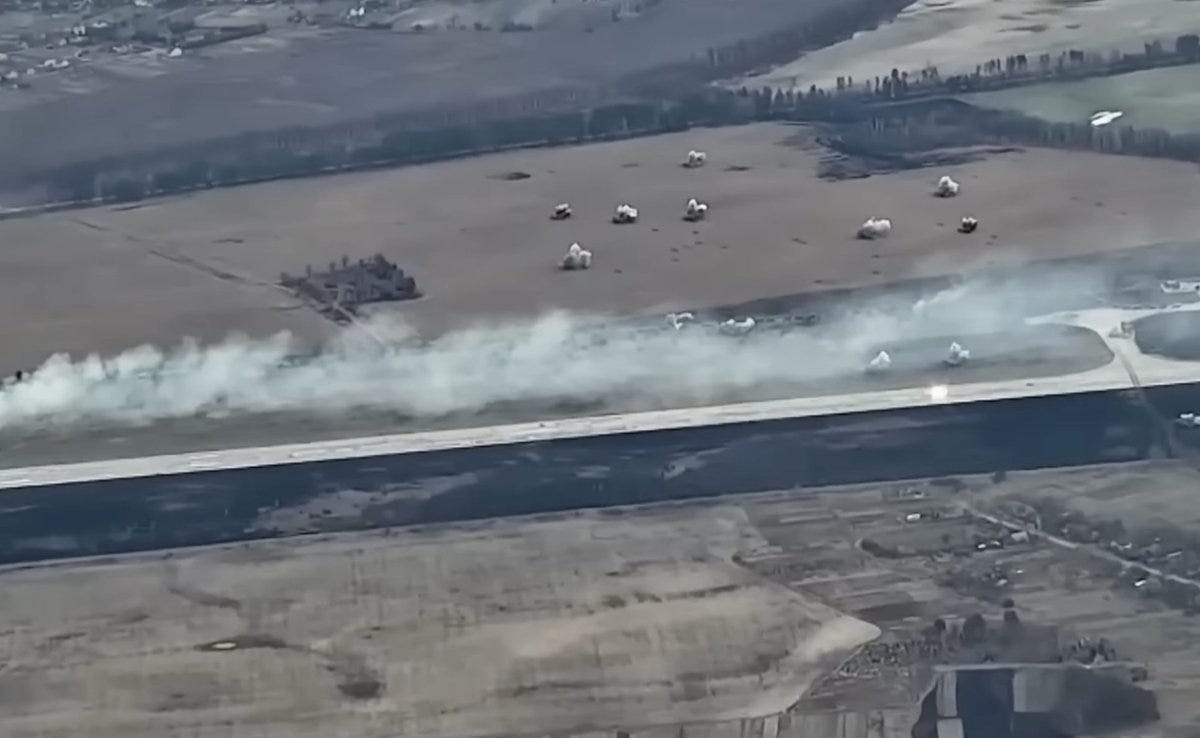
To conclude the Battle Of Hostomel airport became one of the most important battles of the war.
Stopping Russian forces landing a large force so close to the capital city, enabled Ukrainian defenders to organise and mobilise quick enough to hold off the large land advance to come.
If you liked this thread support it and I will continue to recount more famous battles from history.