Table of Contents
Cuba is currently facing the deepest economic collapse it has seen since the "Special Period" that followed the fall of the Soviet Union and this is no coincidence. Since January the Trump administration has suffocated the small islands fuel supply by threatening to tariff any country that ships fuel to Havana. The result is a near total fuel blockade which has pushed the already economically fragile country to its limits. Washington calls it maximum pressure, UN experts push back, saying “Energy starvation as a coercive tool is incompatible with international human rights norms.”
The pressure is no longer purely economic. On 29 May, General Francis Donovan, the US Marine commander of Southern Command, met senior Cuban officers led by General Roberto Legrá Sotolongo at the perimeter of Guantanamo Bay - the first such meeting by a SOUTHCOM chief in recent memory. It came as the USS Nimitz carrier group operated in the Caribbean, days after CIA director John Ratcliffe visited Havana, and just nine days after Washington charged former president Raúl Castro with four counts of murder over the 1996 shoot-down of two Miami exile aircraft. Cuba’s foreign minister, President Miguel Díaz-Canel, has warned that any US strike would produce a “bloodbath.”
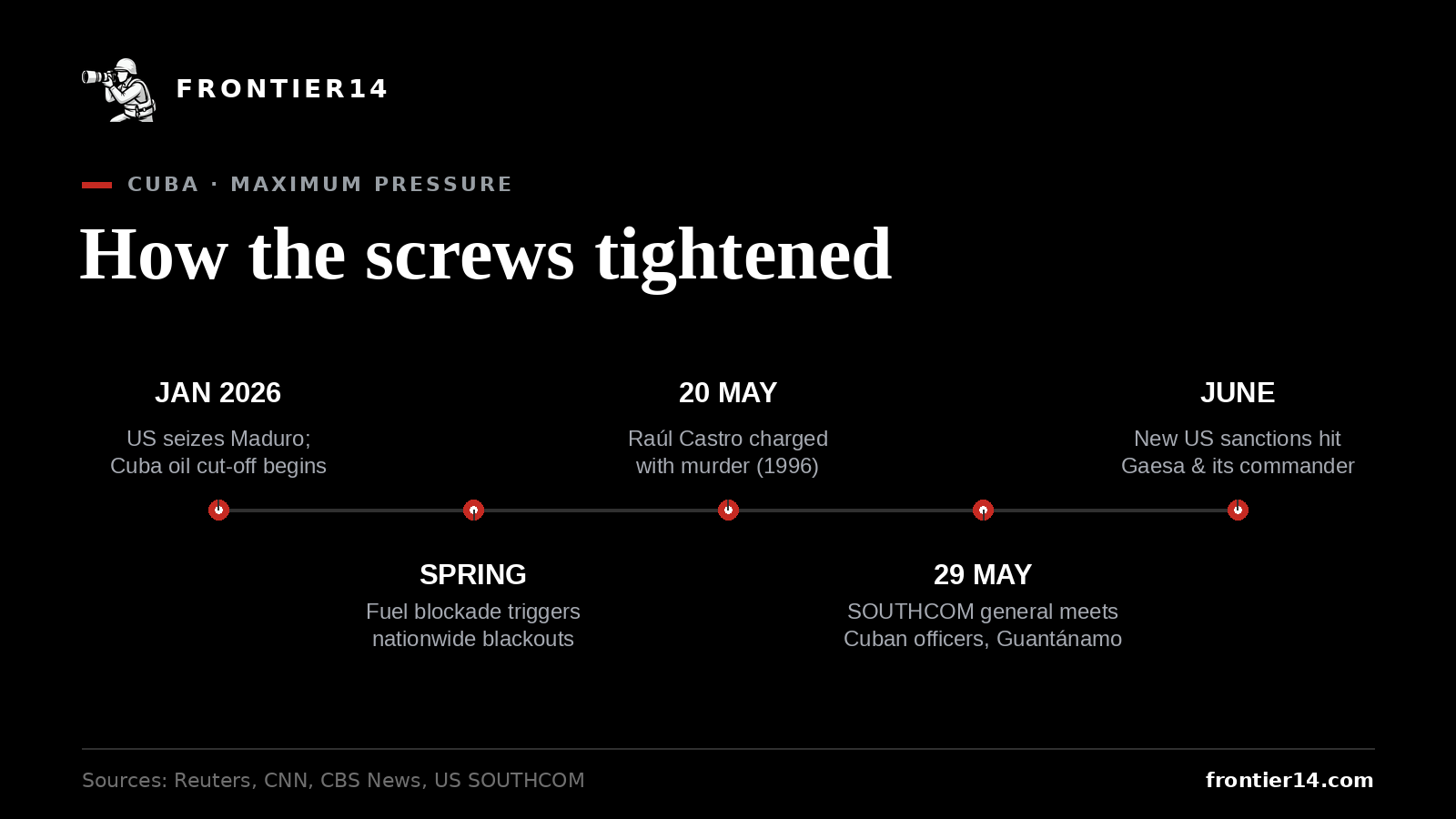
The key trigger of this episode occurred more than a thousand miles away from the island in January when U.S. forces toppled Venezuelan dictator Nicolas Maduro, Havana's last major oil patron and regional guardian. After, Trump began to Publicly broadcast the collapse of Cuba before moving to cut off its supplies (namely Venezuelan linked oil tankers.) For an economy that runs on imported fuel, the effect has been brutal.
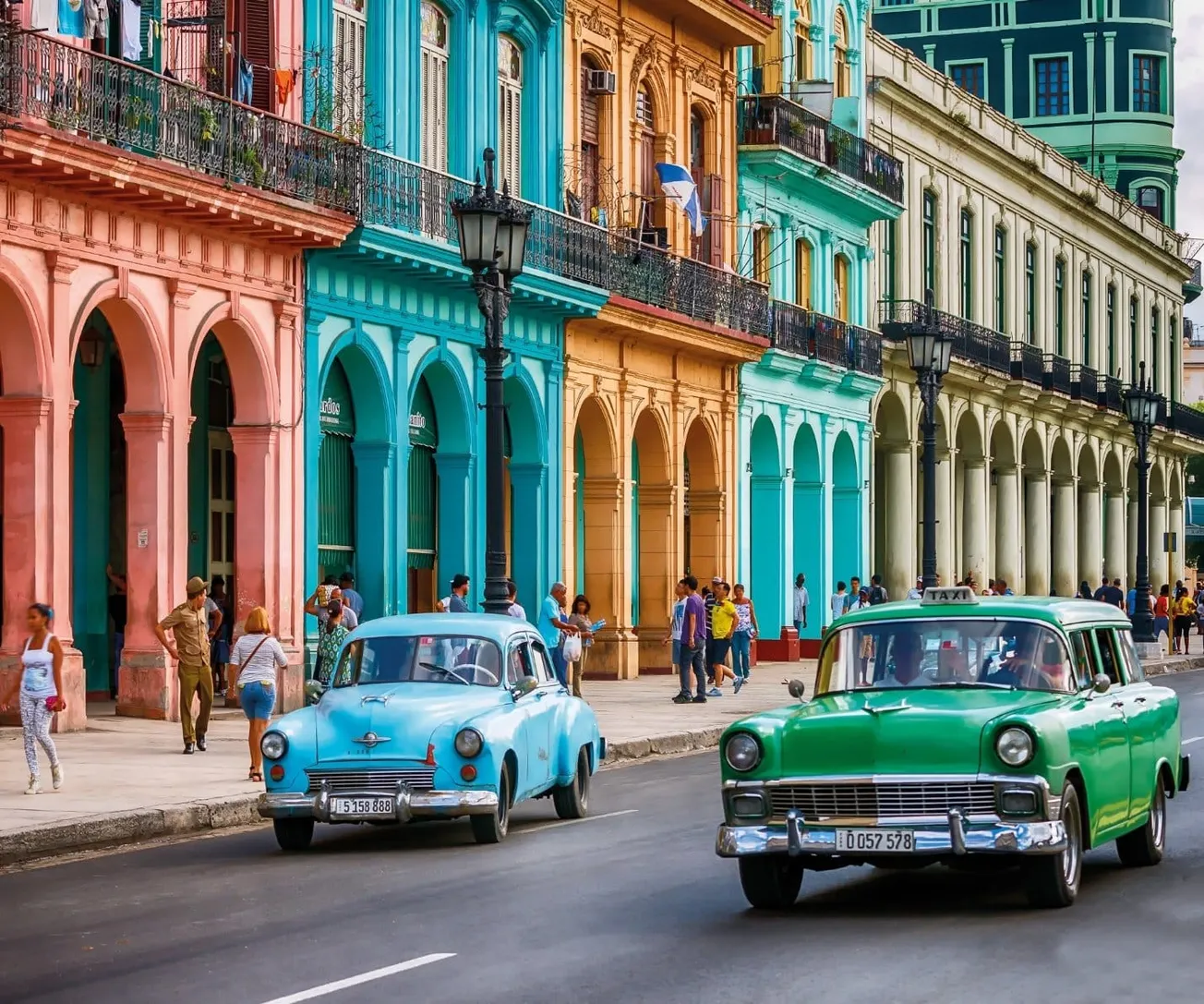
Reuters reporting from Old Havana described residents such as Felicia de la Caridad Alvarez, a 64-year-old former hospital worker who rarely has power or running water and whose food has spoiled in a dead refrigerator, she is just one of millions in the same position. Households survive on a few hours of electricity a day; many families have gone back to cooking with wood and charcoal - those who can afford it bolt solar panels onto homes and cars.
The Economist estimates the on-island population has fallen from more than 11 million to under 9 million since 2021, as Cubans vote with their feet. One academic who has studied the island for three decades bluntly said that five months without fuel would tip even Switzerland into a state of emergency.
Gaesa: the conglomerate that is also a state
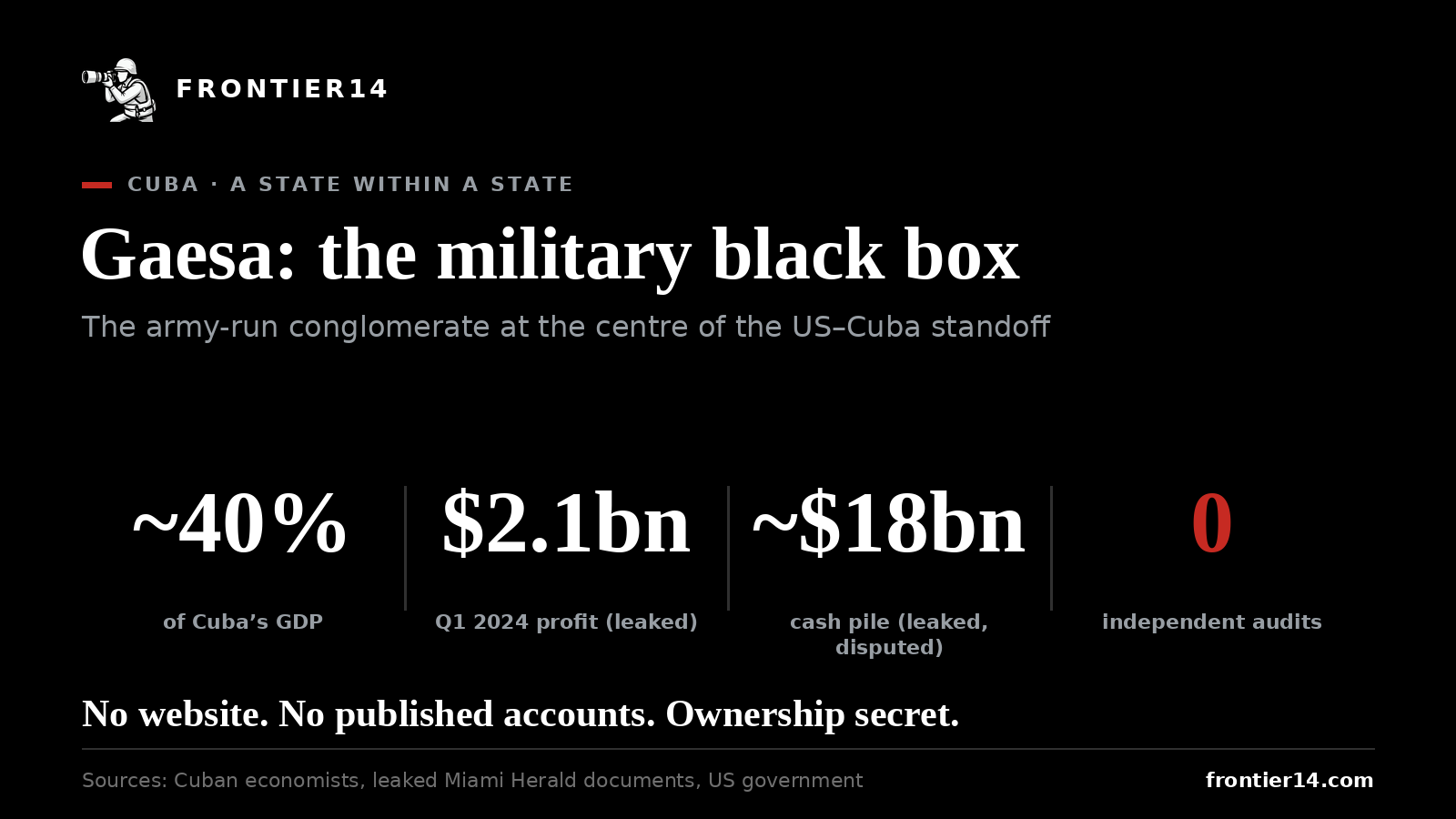
When you are in Cuba, whether you are staying in a hotel, grabbing a bite to eat or sending remittances to your relatives, the business handling your money is likely Gaesa (Grupo de Administración Empresarial SA). Gaesa is a military-run conglomerate that, by the estimate of Cuban economists, leaked documents and the US government, accounts for as much as 40% of Cuba's GDP.
The business is also a black box. Gaesa has no website, publishes no accounts and even safeguards the details of its ownership. Despite this, rare insights come from leaks: documents published by the Miami Herald put Gaesa's profit at $2.1bn in the first quarter of 2024 alone, with one suggesting an $18bn cash pile, although many analysts are sceptical of this figure.
Gaesa sits at the top of Cuba’s power structure. Prime Minister Manuel Marrero once ran its hotel division, and for years it was led by Raúl Castro’s son-in-law, General Luis Alberto Rodríguez López-Calleja, until his death in 2021. His son is now reportedly one of Cuba’s key figures in talks with Washington.
Economists see Gaesa as a military-run business empire that controls hard currency and rewards loyal insiders. Exile analyst Emilio Morales calls it “a kleptocracy, pure and simple.” Havana denies that GAESA hoards national wealth and argues that secrecy is necessary to withstand U.S. sanctions.
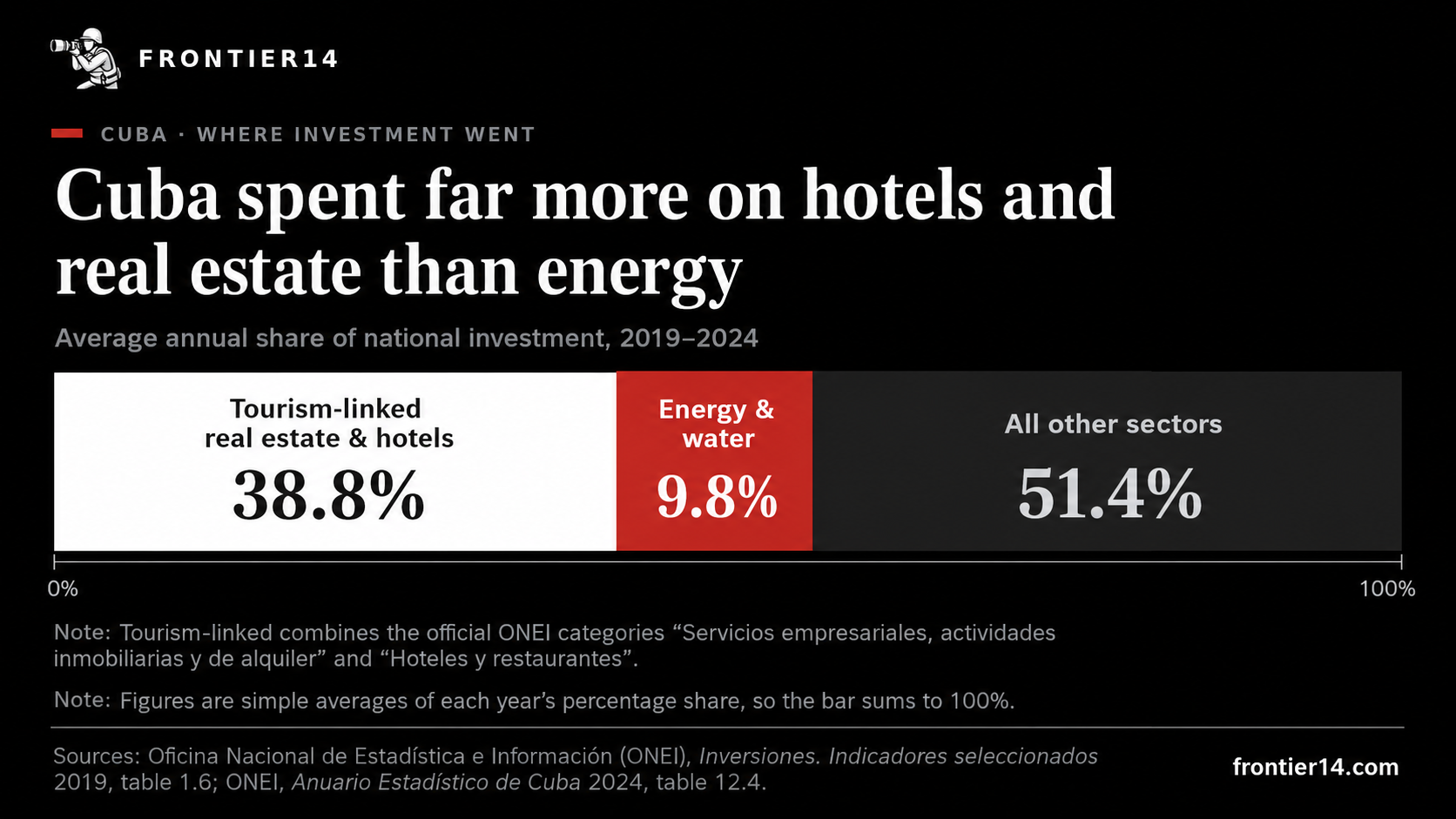
Gaesa is also a large part of the explanation behind the blackouts in Cuba as economist Ricardo Torres Pérez points out, Cuba funnelled roughly 40% of all national investment into tourism between 2019 and 2024 much of it Gaesa hotel construction. Spending on basic infrastructure such as energy and water fell below 10% in several of those years.
The Deadlock
This is why Gaesa has turned out to be one of the hardest knots in negotiations. Washington is pushing for Cuba to liberalise its economy, reform its political system, free political prisoners and compensate for property seized after the 1959 revolution. This would essentially involve dismantling the Gaesa empire which from the perspective of Havana is one of the few structures capable of earning hard currency, managing scarce imports and keeping parts of the state functioning under sanctions. Secretary of State Marco Rubio has been scathing, arguing that serious reform is "impossible with these people in charge."
Havana says it is willing to discuss democracy, human rights, business, migration and counter-narcotics cooperation, but insists its political and economic systems are off the table. The irony of this is that meaningful reform isn't plausible without touching the system that controls it.
For now, Cuba’s crisis has become a negotiation over the one structure Havana appears least willing to change.