Table of Contents
Has the UK’s Counter-Terrorism Strategy Over-Emphasised the Threat from Jihadist Terrorism at the Expense of Other Terrorist Threats?
British counterterrorism has not overemphasised the jihadist threat but has instead evolved dynamically to address the most persistent and highest-priority threats facing British security. Jihadist violence continues to dominate due to its longevity, ideological rigidity, lethality, and organisational resilience. By no means do I wish to play down the increasing threat of right-wing extremism, I instead argue CT strategy has evolved adequately to meet this emerging threat, as well as right wing extremism not rivalling the unique danger that Jihadism holds
Assessing Claims of Disproportionate Focus:
Academics such as Kundani[1] and Heath Kelly[2] argue post 911 securitisation and bias entrenched an institutional focus on Islamic violence, which led to an overlooking of far-right extremism. This critique has gained traction as Prevent referrals relating to right-wing extremism exceeded Islamist-related referrals in the year to March 2025 by a 1000, yet the security apparatus appears still focused on Islamist threat[3]. Kundani goes on to argue this overfocus has alienated Muslim communities, marginalising young Muslim men making them more susceptible to radicalisation and has created further division within society.
This essay rejects this thesis; on the grounds UK CT has demonstrated significant adaptability since 2010 to deal with the right-wing threat through adapting existing strategies and enacting new approaches. UK CT has acknowledged the differences in right wing terrorism in its organisational structure, radicalisation process and attack profiles and have adapted frameworks such as prevent amongst prosecution legislation accordingly[4]. This essay argue CT has shown a dynamism rather than inaction and has not unjustly overfocused on Jihadism.
Historical Development of UK Counter-Terrorism Strategy
Prior to the 2000s, UK terrorist threat according to Steven Greer was dominated by the separatist IRA, this experience had reinforced an idea that terrorism was domestically focused with negotiable political objectives. UK counter terrorism took learnings from their heavy-handed approach in Ireland and believed they had refined an intelligence-based process[5]. However, these lessons proved inadequate confronting the transnational ideologically aggressive Jihadist threat which emerged.
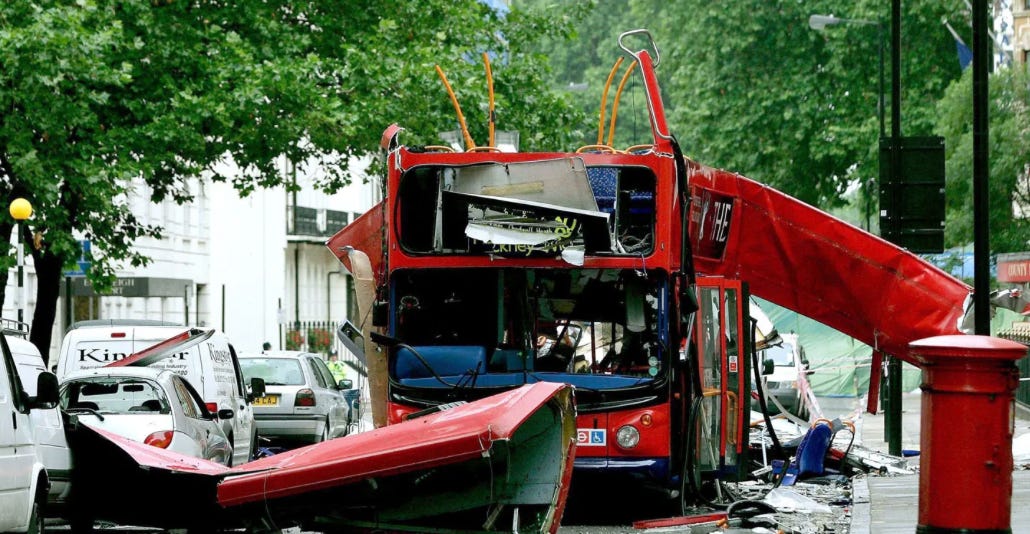
911 and 7/7 attacks elevated Jihadist violence to the forefront of the British Security Agenda. This terrorism differed fundamentally: transnational, ideologically unbounded and originating from hard to track diffuse networks[6]. In response Britain formalised CONTEST in 2003 its counter terrorism strategy, structured around four pillars of cut: Pursue, Prevent, Protect and Prepare. Shortly after the 7/7 bombings occurred, the fact British citizens were radicalised revealed a new homegrown phenomenon, prompting significant prevent expansion across communities, education and public services
CONTEST evolved further with ISIS’s rise in the 2010s. Unlike al-Qaeda’s hierarchical networks, ISIS promoted decentralised lone-actor attacks using low-tech methods and rapid online radicalisation, reducing warning times and forcing prioritisation of early prevention through enhanced surveillance, reduced intervention thresholds, and disruption tools including TPIMs[7]. By the early 2020s, far-right extremism emerged as an increasingly prominent threat. UK counterterrorism adapted by applying frameworks developed for jihadist threats to far-right extremism, reinforcing an ideology-agnostic, behaviour-based approach. This evolution demonstrates that whilst jihadist threats have dominated resource allocation, this reflects a proportionate response to empirical threat levels rather than institutional rigidity.
Why Jihadist Terrorism Has Justifiably Dominated UK Counter-Terrorism Priorities
Persistence and Ideological/Contextual Drivers
Jihadist terrorism has posed the greatest threat to British citizens historically and continues to do so, representing a persistent and evolving danger, justifying sustained CT focus. The 2023 CONTEST report indicated 64% of MI5’s caseload concerns jihadist Islamic threats. September 2024 Counter Terrorism Policing data revealed 60% of terrorists in custody hold Islamist extremist beliefs, with over 40,000 Islamic extremists on the Terror Watchlist[8]. Examining major attacks over two decades, the vast majority are jihadist: from 7/7 bombings (52 deaths, 2005) to Westminster Bridge[9] (6 deaths, 2017) to Manchester Arena (23 deaths, 2017) inspired by ISIS[10]. To suggest CT strategy has over-emphasised the jihadist threat would be to downplay the reality Islamist terrorism has historically and remains the most prevalent threat, same of which could be said across Europe
The threat’s persistence stems from sustained ideological and contextual factors. Jihadist terrorism has been explicitly motivated by Western interventionism in the Middle East, creating sustained grievances continuing to fuel radicalization. Osama Bin Laden[11]cited Western intervention in Afghanistan and Iraq as key justifications for attacks, O Duffey finding that 82% of UK-based jihadist plots between 2001-2015 explicitly referenced British foreign policy as motivation[12]. Given historical attack motivations, Britain’s support for Israeli military action in Gaza including extensive arms export licences and reconnaissance flights risks intensifying grievances. The scale and brutality of the strikes may further exacerbate this potential violence and reinforce terrorist motivations. Recent incidents, such as the Manchester synagogue stabbing and the Bondi Beach attack in Sydney, illustrate how Islamist attackers are increasingly framing violence in the name of Palestine. Consequently, Islamist extremism is likely to continue dominating counterterrorism caseloads as grievances persist and intensify.
Moreover, Islamist extremism represents a distinctive comparative threat due to its ideological absolutism, which explains both its prevalence and durability. Unlike separatist terrorism driven by negotiable political objectives such as Corsican nationalism, which largely subsided following enhanced autonomy jihadist violence operates under different imperatives. As Hegghammer notes, “violence is framed not as a strategic choice but as a religious duty whose legitimacy derives from divine scripture[13].” This theological framing sustains a propensity for violence regardless of social, economic, or political conditions. While right-wing extremism draws on demographic anxieties or economic depravity, jihadist terrorism lacks negotiable political goals beyond violence itself, instead motivated by eschatological beliefs in a cosmic struggle between believers and infidels. Consequently, jihadist violence does not decline with organizational collapse or leadership decapitation. Despite ISIS losing its caliphate in 2019 and al-Qaeda losing approximately 75%[14] of its pre-9/11 leadership by 2015[15], the ideology continues to inspire decentralized violence[16]. ISIS-inspired attacks killed 142 people[17] across Europe in 2024 alone, this ideological rigidity justifies the over focus of CT.
Lethality and Methods of Attack
Jihadist terrorism also represents a unique threat in its violent nature, hence UK counter-terrorism strategy’s strong emphasis on countering this threat. Initially, British intelligence agencies were shocked by the brutality of Jihadist violence, quickly realising the goal was unselective maximum violence. Jihadist groups need not contend with domestic public support especially compared to separatist groups; therefore, violence is seen as vessel of Symbolism[18].
The statistical evidence is stark, since 2000, Islamic terrorist attacks claimed approximately 100 British lives, while right-wing extremist attacks claimed 6. The deadliest recent British attacks have been jihadist: 7/7 bombings (52 lives) and Manchester Arena (23 lives)[19].This propensity for mass killing is ideologically rooted, martyrdom is framed as religiously desirable, incentivising large-scale violence through promises of spiritual reward for those who die fighting perceived infidels[20]. Religious context dehumanises likely violence victims, viewed as legitimate targets in cosmic struggle. This fundamentally has an influence on chosen attack strategies which have greater lethality, suicide vests and vehicle ramming attacks are utilized, the goal is not to influence change rather leave destruction with 0 concern for life.
By contrast, far-right terrorists have historically according to Tore Bjogo have been more likely to target individual figures to send symbolic statements[21], exemplified by Labour MP Jo Cox’s 2016 murder by Thomas Mair. Analysis of 90 far-right attacks in Western Europe between 2000-2019 found that 73% involved targeted violence against specific individuals or small groups rather than indiscriminate mass casualties (RAN, 2021)[22]. While politically significant and deeply tragic, this represents a different threat profile: targeted assassination rather than indiscriminate mass violence, which in turn justifies a skewed focus towards mass assault Jihadist violence. This distinction reflects underlying ideological imperatives. Koehler (2016) shows that right-wing extremists typically conceptualise violence as defensive and targeted, aimed at destabilising political systems while preserving in-group legitimacy and broader public sympathy[23]. Indiscriminate violence risks alienating their perceived constituency and contradicts core beliefs rooted in traditionalism and racialised notions of civility. Mass civilian attacks would therefore undermine their narrative and generate internal cognitive dissonance, constraining tactical choices.
International Networks and Operational Sophistication/Evolution
Jihadist terrorism has represented a unique threat due to its international nature and access to sophisticated training infrastructure. Jihadists historically accessed transnational networks of funding and training, meaning they could be better equipped to carry out more devastating violence, giving higher lethality and operational capability. Much earlier al-Qaeda plotting involved operatives trained in camps in Pakistan, Afghanistan, and Yemen returning to the United Kingdom to commit terror acts. Mohammad Sidique Khan, responsible for leading the 7/7 bombings, travelled to Pakistan multiple times in 2002-2003, learning to create homemade hydrogen peroxide-based explosive devices[24].
Jihadists were trained in surveillance, coordination, and operational security, meaning they were more lethal, harder to detect, and capable of coordinating attacks across multiple locations simultaneously (Jackson et al., 2011[25]). Compared to the largely domestic far-right threat, which is often less organized, more personal and less lethal. Jihadist networks have repeatedly targeted British citizens and forces both at home and abroad, as demonstrated by attacks such as the 2002 Bali bombings, which killed 28 Britons, and sustained insurgent threats against UK soldiers in Afghanistan and Iraq[26].
ISIS represented an evolution and furthering of Jihadists threat’s prevalence and justifying continued prioritization. The persistent danger lies in sustained motivation materializing in continuous innovation and adaptation to counter-terrorism measures. ISIS’s social media exploitation and accelerated online radicalization enabled recruitment at unprecedented rates attracting 40,000 foreign fighters from 120 countries compared to al-Qaeda’s 10,000-20,000. ISIS also represented decentralised operations lone wolf attacks unlike terrorist networks such as the IRA[27].This decentralization made ISIS-inspired terrorism extremely difficult to predict and prevent, as attackers could radicalize quickly online without contacting organized groups. Moreover, when ISIS lost territory and monthly revenue plummeted from $40 million in 2015, the movement adapted by encouraging simpler low-resource attack methods using vehicles and knives, demonstrating continuous evolution demanding sustained CT focus.
Proportionate Response to Evolving Threats
Lastly, I reject the notion that UK counterterrorism has over-emphasised jihadist threats at the cost of others as British strategy has proportionally responded to the far-right threat’s evolution as it has progressed. Translating previous tactics developed for jihadist terrorism to address right-wing radicals whilst adapting tactics to account for differential threat characteristics.
In the year ending March 2025, 21% of all Prevent referrals were for extreme right-wing concerns, while right-wing extremists comprised 25% of active counter-terrorism caseloads[28]. This coincides with right-wing extremism’s rise following the 2015 European migration crisis and economic decline. British counter-terrorism strategy should reflect emerging threats, and as caseloads continue rising, resources and focus are being appropriately redirected. UK counterterrorism has adapted to the evolving profile of right-wing extremism, which is increasingly rooted in online spaces such as gaming platforms, encrypted chats, and meme forums and disproportionately involves younger individuals. This shift is reflected in expanded Prevent training across schools and youth services, enhanced online monitoring, and MI5’s assumption of responsibility for teenage suspects. The recent disruption of a far-right plot by three individuals targeting a synagogue demonstrates the effectiveness of these tailored responses.
Despite a rising right-wing caseload, this threat has not translated into large-scale attacks in Britain, largely due to its fragmented organisational structure and ideological incoherence[29]. Only six right-wing groups are proscribed in the UK, compared with over 60 Islamist organisations[30], and MI5 notes that far-right extremism encompasses “varied, wide-ranging and often overlapping” ideologies from white supremacism and accelerationism to conspiracy-driven, highly personalised belief systems lacking the unified theological framework of Salafi-jihadism[31]. Its predominantly online radicalisation makes it easier to detect and disrupt, leaving the threat decentralised and individualised: of 14 right-wing attacks, 12 were committed by lone actors[32]. Consequently, the far right lacks the training infrastructure, operational sophistication, and logistical capacity that enabled mass-casualty jihadist attacks such as the 2005 London bombings and the 2017 Manchester Arena attack. The February 2024 disruption of three neo-Nazis who organised entirely online and were infiltrated before executing planned attacks illustrates how digital pathways enable pre-emptive intervention[33]. This differential threat profile explains why jihadist extremism has warranted primary counterterrorism resourcing, while also demonstrating the UK’s ability to adapt proportionately to emerging threats.
British counterterrorism has not disproportionately prioritised jihadist extremism but has allocated resources according to assessed threat. Jihadist terrorism continues to warrant sustained focus due to its persistence, lethality, ideological rigidity, and capacity to adapt. While right-wing extremism is rising, UK counterterrorism has responded proportionately through strategic and operational adjustments, as reflected in recent CONTEST reforms[34]. Overall, the UK demonstrates a mature, evidence-based approach to national security, prioritising threats based on risk rather than bias, with jihadist extremism remaining the primary focus so long as it poses the greatest danger to the public.